As we look toward next week’s December employment report, we must critically evaluate the distortions that defined the November unemployment rate. While the headline figure rose 12.5bp between September and November—seemingly providing clear evidence that unemployment was breaking out of its established mid-2024 range—our forensic analysis suggests this move was heavily polluted. We estimate that federal government developments accounted for roughly half of that increase.
The simultaneous release of the November and partial October employment reports could have been a source of significant volatility, but the data ultimately failed to shift the labor market narrative established prior to the government shutdown. Private payrolls grew by 52,000 in October and 69,000 in November, hovering remarkably close to the three- and six-month averages through September. While the headline unemployment rate climbed from 4.4% to 4.6% during this two-month gap, our analysis suggests that after adjusting for technical distortions
Real GDP surged at a 4.3% annualized rate in the third quarter, delivering the strongest quarterly expansion in two years and handily beating both the consensus and our own upgraded 3.5% forecast. This print confirms significant mid-year momentum, effectively brushing off concerns regarding a softening labor market. While growth has averaged 2.5% across 2025, we now see meaningful upside risk to our 1.0% projection for the fourth quarter. The primary engine was a 3.5% acceleration in consumer spending, with robust demand spanning both goods/services
Pending home sales—a reliable leading indicator for existing home turnover with a one-to-two-month lead time—surged 3.3% in November, catapulting the index to its highest level since February 2023. This print is particularly impressive given that average mortgage rates actually drifted 10bp higher during the month, and it follows a robust, upwardly revised 2.4% gain in October. Although the year-over-year figure remains slightly underwater at -0.3%, the persistent retreat in mortgage rates since the mid-year peak has clearly acted as a catalyst
The FOMC delivered a widely anticipated 25bp cut today, lowering the target range to 3.5–3.75%. The meeting featured a three-way split in dissents—two hawkish and one dovish—perfectly mirroring consensus expectations. While the “dot plot” remained largely unchanged from September, the overarching message from the statement and Chair Powell’s press conference was clear: the era of “risk management” cuts is likely over. With policy rates now perceived to be within the plausible range of neutral—
Türkiye’s trade and US tariffs: Much ado about little
On August 1, the US increased the reciprocal tariff on imports from Türkiye to 15%, up from 10%. Since March 2018, the US has imposed a 25% tariff on steel and aluminium imports from Türkiye,so that tariff is not new for the country, unlike the rest of the world. The US also announced a 25% tariff on autos and auto parts on April 2. Given that the US is Türki- ye’s second-largest export partner after Germany, Türkiye’s exports might appear vulnerable to US tariffs, however, our analysis demonstrates otherwise.
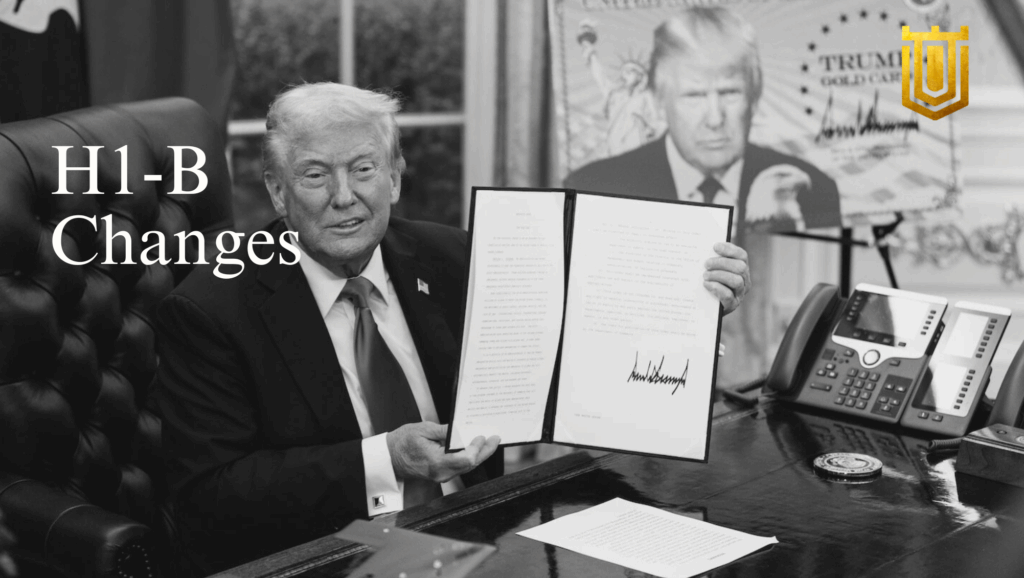
Last week the White House announced there will be a new $100,000 H1-B visa fee for the next 12 months. It will apply only to visas for new employment, in a speciality occupation, for a worker currently outside the US. It does not apply to H1-B renewals, which we interpret to include extensions at an existing employer or a change of employer. The DHS Secretary can, however, provide an exemption, which can be done for an individual person, company, or entire industry. In addition, the Labor Secretary will likely raise the cost.
Inflation worries linger at the Fed, even as it cuts rates
The minutes to the September 16-17 FOMC meeting highlighted the Committee’s lingering inflation concerns, even as it voted to cut rates to better manage risks. In particular, the minutes note that “downside risks to employment had increased over the intermeeting period and that upside risks to inflation had either diminished or not increased.” While most participants (voters and non-voters) saw this as appropriate cause to lower the funds rate.
The federal government shut down on October 1. In past research we’ve noted that the economic effects of shutdowns tend to be minor. Most shutdowns are very short-lived, though recent episodes include a 17-day shutdown in Oct 2013 and a record 35-day shutdown in Dec 2018-Jan 2019. The 2013 shutdown is more comparable, as no appropriation bills have been passed this fiscal year. Partial funding in 2018-19 limited furloughs and enabled uninterrupted data releases.
Last week the CBO released new demographic forecasts, updating their January estimates to account for changes in immigration policy. The population forecast for 2025 was cut from 0.7% to 0.2%, entirely accounted for by lower net immigration, which now contributes 0.1%. There were also smaller reductions to future years. It was well understood that there would be lower immigration forecasts given that border encounters have plunged, deportations have risen and the budget reconciliation bill.
The FOMC cut the funds rate today by 25bp to 4.0-4.25%. There was only one dovish dissent for a larger cut: 50bp from new governor Miran. Moreover, in the press conference Powell suggested 50bp wasn’t seriously entertained by the Committee. Unlike the last meeting, both Governors Bowman and Waller voted with the consensus this time. While this might take them out of the running to be the next chair, it does signal that the independence of the institution
The administration announced new tariffs on April 2.
The January employment report was a little messier than usual, but the underlying message appears to be that the labor market looks just fine. Nonfarm employment increased by 143,000 last month, a smidgeon below expectations but, big picture, reasonably close to the revised 166,000 average monthly gain seen in 2024. The unemployment rate slipped a tenth to a 4.0%, the lowest level since last May. the unemployment rate tightened two tenths on December
The administration announced new tariffs on April 2.
Prior to this we estimate that the effective tariff rate—tariffs collected divided by goods imports—had already increased from 2.3% in 2024 to 10%. That is on a static basis, which assumes no changes in import composition. With the latest announcement that rate would climb to 23% when fully implemented on April 9, equalling rates last seen in the early 20th century (Figure 1), and this is likely to increase further to 25% assuming that tariffs are placed on some additional products.
The 2025 dot was marginally hawkish compared to our expectations, perhaps reflecting a sunnier inflation view—core PCE edged up to 3.2% from 3.1% in June. Yet, 2026 core inflation was also revised to 2.5% from 2.4%, likely driving the tougher policy stance late in 2026 versus June’s forecast. The statement leaned upbeat, noting economic uncertainty “has further waned” (though, per the chart below, Committee members’ uncertainty barely budged).
higher deportations are not yet a game changer for employment
With the administration recently urging ICE to raise arrests to 3,000 per day we check in on the latest deportation trends and their implications for labor markets. While DHS has paused the publication of comprehensive monthly data, they are still reporting timely detention metrics, most easily available via the organization TRAC. These imply that arrest volumes in the interior of the country likely remained under 1,000 per day in May, with deportations perhaps 10k per month higher than in 2024.
Trump'shighly anticipated tariff announcement this afternoon
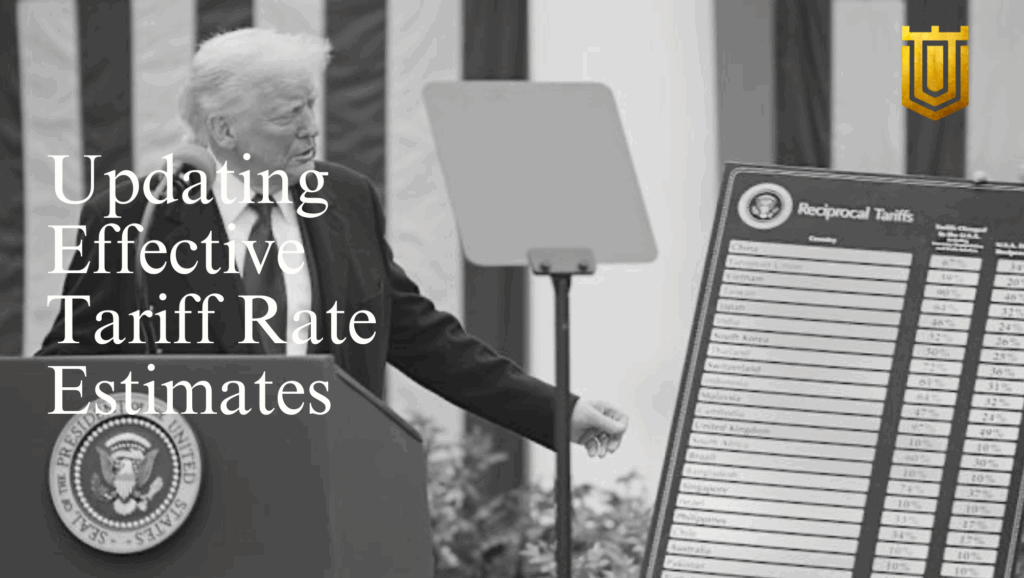
Details are still hazy, but we understand that starting April 5 there will be a 10% minimum tariff on all good imports, and on April 9 tariffs will go up further on countries with which the US has the largest trade deficits. For example, 20%-points on the EU, 24% on Japan, and 34% on China. For the latter, this would take the average tariff rate to 54%. The calculations behind these various numbers are unclear but may have something to do with the size of their bilateral imbalances, even though they were pitched as based on reciprocity.
Fed Chair Powell raises risks of threats to Fed independence
During the first Trump administration, the president frequently expressed his dissatisfaction with Fed Chair Powell, but there was no significant impact on the independence of the Federal Reserve’s policy decisions. In the second Trump administration, there have been potentially more concrete efforts to align the Federal Reserve’s actions more closely with the preferences of the White House. In this note, we first review the unique and sometimes confusing structure of the Federal Reserve and FOMC.
The headline jobs number in the February employment report was decent certainly better than some feared—but most of the details of the report were soft. Nonfarm employment increased 151k last month, with only modest revisions to prior months. This was close to the average seen over the last year. However, the unemployment rate rose from 4.01% in January to 4.14% last month. And after dipping in January, the average workweek failed to recover last month, staying unchanged at a very low 34.1 hours.
In our 2025 Outlook we highlighted how strong consumer balance sheets have been supporting spending. While real PCE growth surged over 4% in 2H24, we look for consumer spending in 1H25 to normalize to above 2% given the still solid labor market. Rising delinquencies had led to some questions about the health of consumers, but the latest 4Q household debt and credit report from the NY Fed shows delinquency rates for credit cards and auto loans have stabilized
The minutes of the January FOMC meeting confirmed the message that Chair Powell gave at the January press conference and his subsequent Congressional testimony: that the Fed is in no hurry to cut rates further — but also retains its easing bias. The minutes revealed that participants saw the “current high degree of uncertainty” as warranting a “careful approach” to changing monetary policy. With inflation still “somewhat elevated,” participants indicated they want to see further progress on inflation before adjusting rates.
In contrast with other January inflation data this week, import prices came in slightly softer than expected. The headline measure rose 0.3% last month, but unlike most other inflation data these are not released as seasonally adjusted. On a year-ago basis, import prices grew 1.9% in January, down from an upwardly-revised 2.3% in December but still near the higher end of its range over the past two years; a year-ago import prices had been contracting at a -1.3% annual pace.
While the January final goods PPI represented another upside surprise to consensus forecasts for inflation last month, it was more closely aligned with our own forecast for firming. More importantly, the key components that feed into our core PCE tracking model were uniformly soft (once seasonally adjusted to match the construction of core PCE—the source data from the PPI are reported as NSA), reinforcing our below-consensus tracking estimate
The January consumer price index (CPI) surprised to the upside as the headline index rose 0.5% (0.467% to three decimals), nudging the year-ago inflation rate back to 3.0%.The surprise was largely in the core (ex. food and energy) index, which rose 0.4 (0.446% to three decimals) in January, also nudging up year-ago core CPI inflation, to 3.3%.
Risks to the US outlook economic escalated materially over the weekend. President Trump’s executive orders threatening to increase tariff rates on imports from Canada (10% energy, 25% non energy), China (10%), and Mexico (25%), are set to go into effect at 12:01 Tuesday morning. De minimis imports (under $800) would no longer be excluded from tariffs nor will duty drawbacks be available.
The announced pause in federal loan and grant program payments was rescinded on Wednesday, resolving the confusion caused earlier in the week. This episode highlighted both the breadth and depth of these programs and their importance to the economic life of the American people.
Wages firm modestly in 4Q—ECI against cooling trend.
The Employment Cost Index, matched our and consensus expectations with a 0.9% rise in the headline total compensation measure 4Q, or 3.6% at an annualized quarterly pace.
As widely expected, the Fed kept policy unchanged today with a 4.25 to 4.5% target rate. The decision was unanimous among the new set of voters for 2025. The guidance language was left unchanged as anticipated, and Chair Powell argued that both the economy and policy are in a good place now.
In last week’s employment report September nonfarm payroll employment increased 254k (223k private), well above the trailing three-month average of 140k (103k private), which raised discussion on the seasonal adjustment.
Progress on Euro area disinflation is undeniable. Headline inflation is now below 2%oya having peaked at 10.6% two years ago. Meanwhile, core inflation is now 2.7%oya, a 3%-pts drop since March 2023.
A recent Bloomberg Businessweek interview with Republican presidential nominee Trump began with an open-ended question: “What kind of economy do you want for the American people in terms of innovation, opportunity and global competitiveness?”
China launched a new round of policy easing in late September, and the comprehensive package beat market expectations. The positive surprise raised market expectations for further stimulus measures.
The FOMC cut its target rate by 25bp today, as expected, taking the fed funds range down to 4.5-4.75%. Chair Powell’s press conference sounded a little dovish to us.
Solid August wage data point to sustained momentum in pay growth
Our forecast for a series of policy rate rises reflects a call that the BoJ will look through volatility in the cyclical activity data to focus on what it terms a “virtuous cycle” between rising wages and higher prices.
As broadly expected, the FOMC cut the target range for the fed funds rate by 25bp today to 4.25-4.5%, but as Chair Powell indicated at the press conference, policy is now entering a “new phase” where the Committee will move more cautiously.
Tensions in the Middle East drove crude oil prices higher in recent weeks, raising concerns that this shock could boost inflation and dampen global growth.
The Trump win in the U.S. presidential election significantly increased the external risk faced by the Chinese economy. On our base case scenario that US tariffs on Chinese imports will be hiked to 60% in 1H25, China’s growth outlook will be damaged by around 2%pts
While the broader trade war (10%-20% tariffs on all US imports) will likely be put on hold, tariffs on China are expected to ramp up quickly. The average effective tariff rate on Chinese goods in the 2018-19 trade war was lifted from 3% up to 20%.
Europe: defence and Ukraine
support under Trump 2.0
Sizable 2025 Ukraine support is already available, but concerns about military aid shortfall without US. Ukraine’s reconstruction unlikely to have near-term EU growth impact.